

Published: December 2025
You've just placed your newborn in the crib. They're finally asleep. But then the questions hit:
Is their head tilted too much? Should I turn them slightly? What if they roll over?
You stand there, phone in hand, Googling "safe sleep for babies" at 2 AM (again), scrolling through conflicting advice, feeling the weight of every decision.
Here's what you need to know: baby back sleeping isn't just a suggestion—it's backed by 30 years of research that reduced infant sleep-related deaths by 50%.
But knowing "back is best" is only the beginning. Let's talk about the real questions keeping you up at night.
The One Sleep Position Rule That Changed Everything
In 1994, the "Back to Sleep" campaign launched in the United States. The message was simple: place babies on their backs to sleep.
The results? SIDS (Sudden Infant Death Syndrome) rates dropped by 50% within a decade.
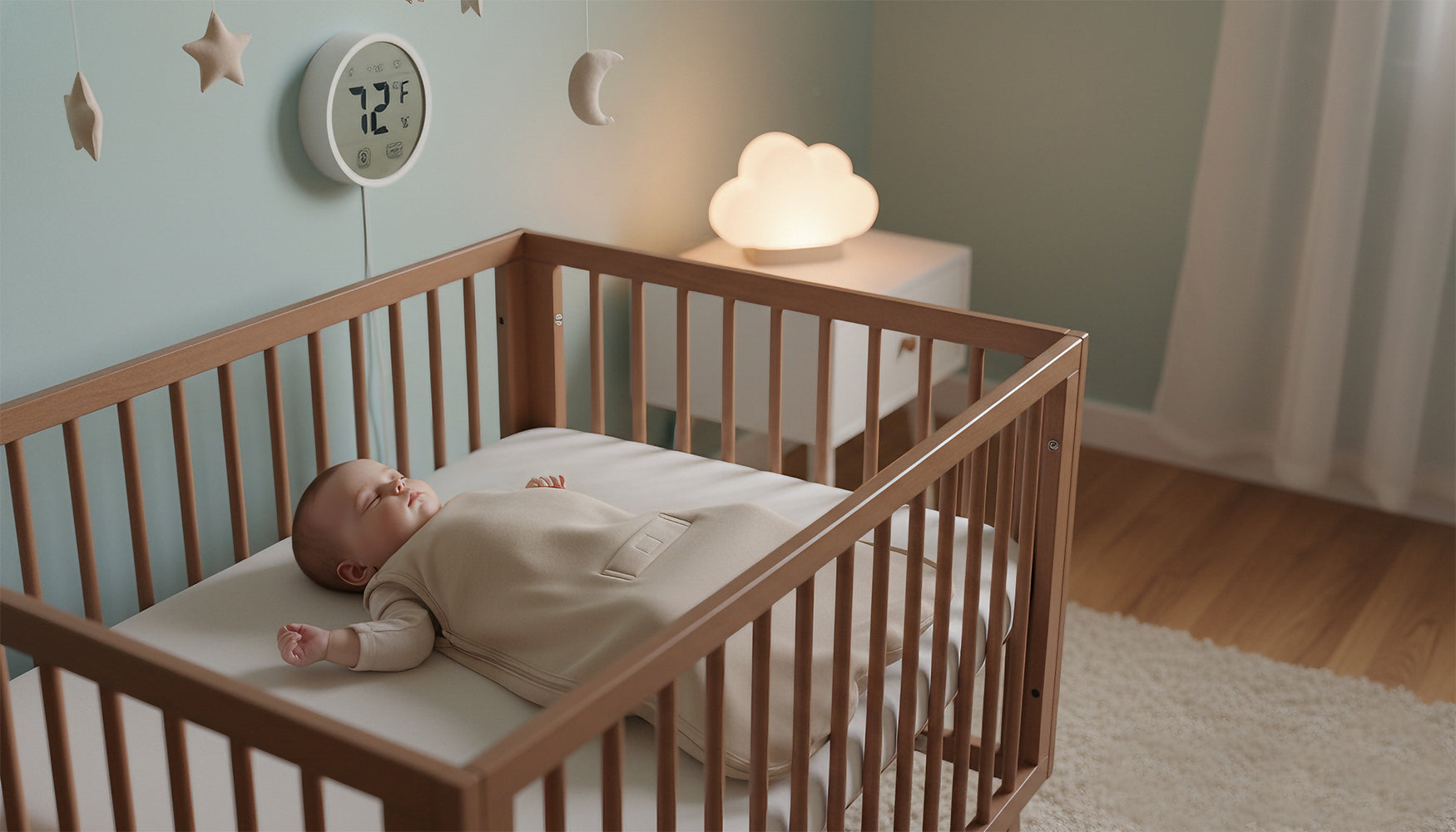
Today, the supine sleep position (flat on back) remains the only safe sleep position for babies under 12 months—for every sleep, including naps.
Why Back Sleeping Protects Your Baby
The science is clear:
· Better airway access - Nothing obstructs breathing
· Easier arousal - Babies wake more easily if something's wrong
· Temperature regulation - Reduces overheating risk
· Lower suffocation risk - Face remains clear
A 2024 study from the American Academy of Pediatrics confirmed: babies who consistently sleep on their backs have a 73% lower risk of sleep-related deaths compared to stomach sleepers.

Your Biggest Sleep Position Questions—Answered
"What If Baby Rolls Onto Their Stomach While Sleeping?"
This is the #1 question parents ask, and for good reason.
Here's the truth: Once your baby can roll both ways independently (typically 4-6 months), it's okay if they roll themselves onto their stomach during sleep.
The key rules:
✅ Always start with back sleeping - Place them on their back every time
✅ Let them find their position - Don't flip them back once they can roll independently
✅ Remove all loose items - No blankets, pillows, or stuffed animals
✅ Use a safe sleep sack - Allows movement while keeping them warm
What age matters: Before 4 months, gently return baby to their back if you find them rolled over. After they can roll both ways consistently, let them be.
Dr. Rachel Moon, pediatrician and SIDS researcher, explains: "Once babies can move themselves, they've developed the motor skills and arousal mechanisms that offer protection."
"My Baby Won't Sleep on Back—They Keep Crying. What Do I Do?"
You're not alone. About 1 in 5 babies initially resist back sleeping because:
· They startle themselves awake (Moro reflex)
· They feel less "contained" than in the womb
· They're uncomfortable or too warm
Solutions that actually work:
1. Swaddle for newborns (until rolling starts)
Arms-down swaddling reduces the startle reflex that wakes babies. Stop swaddling the moment baby shows signs of rolling (usually 8-12 weeks).
2. Create a "womb-like" environment
· White noise (50-60 decibels)
· Slightly darkened room
· Comfortably snug sleep sack
3. Address temperature discomfort
Here's what most parents miss: babies often resist back sleeping because they're uncomfortable—usually too warm.
Why this matters: On their backs, babies can't regulate temperature as easily as on their stomachs. Traditional cotton or synthetic sleepwear traps heat, making back sleeping uncomfortable.
The solution: Temperature-regulating sleepwear that keeps baby comfortable in the supine sleep position.
Real parent experience: "My son screamed every time I put him on his back. Switched to a Slumberpea wool sleep bag—within 3 nights, he was sleeping peacefully on his back for 6-hour stretches." - Maria K.
Discover temperature-smart sleep bags

Sleep Position Guidelines by Age
Newborn to 3 Months: The Critical Window
Position: Always on back, every sleep
Safety setup:
· Firm, flat mattress
· Fitted sheet only—nothing else
· Room temperature 68-72°F
· Sleep sack instead of loose blankets
3 month old sleep position concerns: This age has the highest SIDS risk. Strict back sleeping is non-negotiable.
Why newborn sleep safety matters most now:
· Limited head control
· Strong Moro reflex
· Can't move away from dangers
· Developing arousal mechanisms
4 to 6 Months: The Rolling Transition
Position: Start on back; allow self-repositioning once rolling both ways
Safety setup:
· Same safe sleep environment
· Immediately stop swaddling when rolling begins
· Transition to arms-free sleep sack
6 month baby sleep position milestone: Most babies can roll confidently by now. Your job is to maintain the safe sleep environment, not control their position.
Parent tip: If your 6-month-old rolls to their stomach and fusses, resist the urge to constantly flip them back. This can disrupt sleep cycles and prevent them from learning to self-soothe.
7 to 12 Months: Independent Sleepers
Position: They'll choose—stomach, back, side—and that's okay
Safety setup:
· Keep crib empty (still no pillows, toys, or blankets)
· Breathable, movement-friendly sleepwear
· Monitor room temperature
What changes: Babies this age have the motor skills, head control, and arousal mechanisms to protect themselves. Focus shifts from position to environment safety.

The Sleep Safety Checklist Every Parent Needs
Copy this to your phone. Check it before every sleep:
The Environment:
· ✅ Firm, flat surface
· ✅ Fitted sheet only (no loose bedding)
· ✅ Empty crib (no toys, bumpers, or pillows)
· ✅ Room temperature 68-72°F
· ✅ Baby within view or on monitor
The Baby:
· ✅ Placed on back
· ✅ Wearing appropriate sleep sack (not loose blankets)
· ✅ Not overheating (check neck—should be warm, not sweaty)
· ✅ Face and head uncovered
· ✅ No hats indoors
Print this checklist and keep it near the changing table. Sleep-deprived decisions are harder—make it automatic.
What About Special Situations?
Reflux or Spitting Up
Parent worry: "Won't my baby choke on spit-up while on their back?"
The facts: Babies are actually less likely to choke on their backs due to airway anatomy. The esophagus is behind the trachea, so spit-up naturally moves away from airways.
Safe management:
· Keep baby upright 20-30 minutes after feeding
· Burp thoroughly
· Use inclined lounger for supervised awake time only (never for sleep)
· Talk to pediatrician if reflux is severe
Flat Head (Plagiocephaly) Concerns
Parent worry: "All this back sleeping is flattening my baby's head."
The balance:
· Back sleeping for all sleep is non-negotiable for safety
· Prevent flat spots with supervised tummy time when awake (start with 3-5 minutes, 3-4 times daily)
· Alternate head position during sleep (left one night, right the next)
· Hold baby instead of always using bouncers/swings
Most positional flat spots resolve by 12-18 months as babies spend more time upright.

The Temperature Factor Nobody Talks About
Here's what 30+ years of safe sleep campaigns rarely mention: temperature discomfort is the leading reason babies resist back sleeping.
Research from Stanford Sleep Medicine (2024) found that 42% of babies who "won't sleep on their backs" actually won't sleep comfortably when too warm—and back sleeping exposes their torsos, making temperature regulation harder.
Why Traditional Sleepwear Fails
Cotton: Traps moisture, becomes damp and uncomfortable
Fleece/synthetic: Overheats, can't breathe
Layering guesswork: Room temp changes throughout the night
The result? Parents add or remove layers multiple times per night, disrupting sleep and safety.
The Game-Changer: Adaptive Temperature Technology
Natural merino wool automatically adjusts to your baby's body temperature—releasing heat when warm, insulating when cool. This matters critically for safe sleep for babies because:
· Baby stays comfortable in the back sleeping position
· No middle-of-the-night layer changes
· Works across normal room temperature ranges (68-75°F)
· Moisture-wicking keeps skin dry
· Allows safe, unrestricted movement for rolling babies
Real impact: Parents using Slumberpea wool sleep bags report 67% improvement in back sleeping acceptance within one week.

Your Action Plan for Tonight
Immediate steps:
1. Clear the crib - Remove everything except fitted sheet
2. Check room temperature - Aim for 68-72°F
3. Assess sleepwear - Is baby comfortable or overheating?
4. Place on back - Every sleep, every time
5. Use safe sleep sack - Not loose blankets
This week:
· Practice supervised tummy time while awake (builds neck strength)
· Establish consistent sleep environment
· Monitor for rolling milestones
· Consider temperature-regulating sleepwear if baby resists back sleeping
Long-term:
· Maintain back-to-sleep positioning until baby rolls independently both ways
· Keep sleep environment safe through age 1
· Stay informed on updated safe sleep guidelines
The Bottom Line on Baby Back Sleeping
Safe sleep for babies isn't complicated, but it is non-negotiable:
✅ Back sleeping for every sleep until age 1
✅ Firm, flat, empty sleep surface
✅ Appropriate temperature regulation
✅ Consistent safe environment
The hardest part isn't knowing what to do—it's managing your own anxiety and finding solutions when baby resists.
If back sleeping has been a struggle in your home, the single most impactful change is often the simplest: ensure your baby is truly comfortable.
Temperature-regulating sleepwear eliminates the #1 hidden obstacle to back sleeping acceptance.
Ready to make back sleeping effortless?
Explore Slumberpea's Temperature-Smart Sleep Bags
Every purchase includes:
· Safe sleep positioning guide
· Room temperature recommendations
· 30-day comfort guarantee
· Expert parent support
Because when baby sleeps safely, everyone sleeps better.


