

Published: December 2025
You brought your baby home three days ago. You've been staring at their perfect skin for hours. Then you notice it—a red patch on their cheek. Dry flakes on their scalp. Tiny white bumps on their nose.
Is this normal? Should I call the doctor? Am I doing something wrong?
You Google "newborn skin problems" at 2 AM and find yourself spiraling through conflicting advice, terrifying diagnoses, and product recommendations that contradict each other.
Here's what nobody tells you in the hospital: baby skin is weird. It peels, it flakes, it changes color, it breaks out—and 90% of the time, it's completely normal.
Let's talk about what's actually happening with your baby's skin, what you need to worry about (spoiler: less than you think), and the simple solutions that actually work.
Why Newborn Skin Is So Different (And So Confusing)
Your baby just spent nine months floating in amniotic fluid. Their skin was covered in vernix caseosa—that white, waxy coating you might have seen at birth. They were in a perfectly temperature-controlled, moisture-rich environment.
Now they're in air. Dry air. Air with fluctuating temperatures. Air that pulls moisture from their skin every second.
Their skin is literally learning how to be skin.
The outer layer (epidermis) is thinner than yours—about 30% thinner in newborns. The barrier function that keeps moisture in and irritants out? Still developing. Temperature regulation? Not fully operational until around 6 months.
This is why baby skin reacts to everything: fabrics, room temperature, bath products, even their own drool.
Understanding this helps you stop panicking and start problem-solving.

The 5 Most Common Baby Skin Problems (And What To Do About Each)
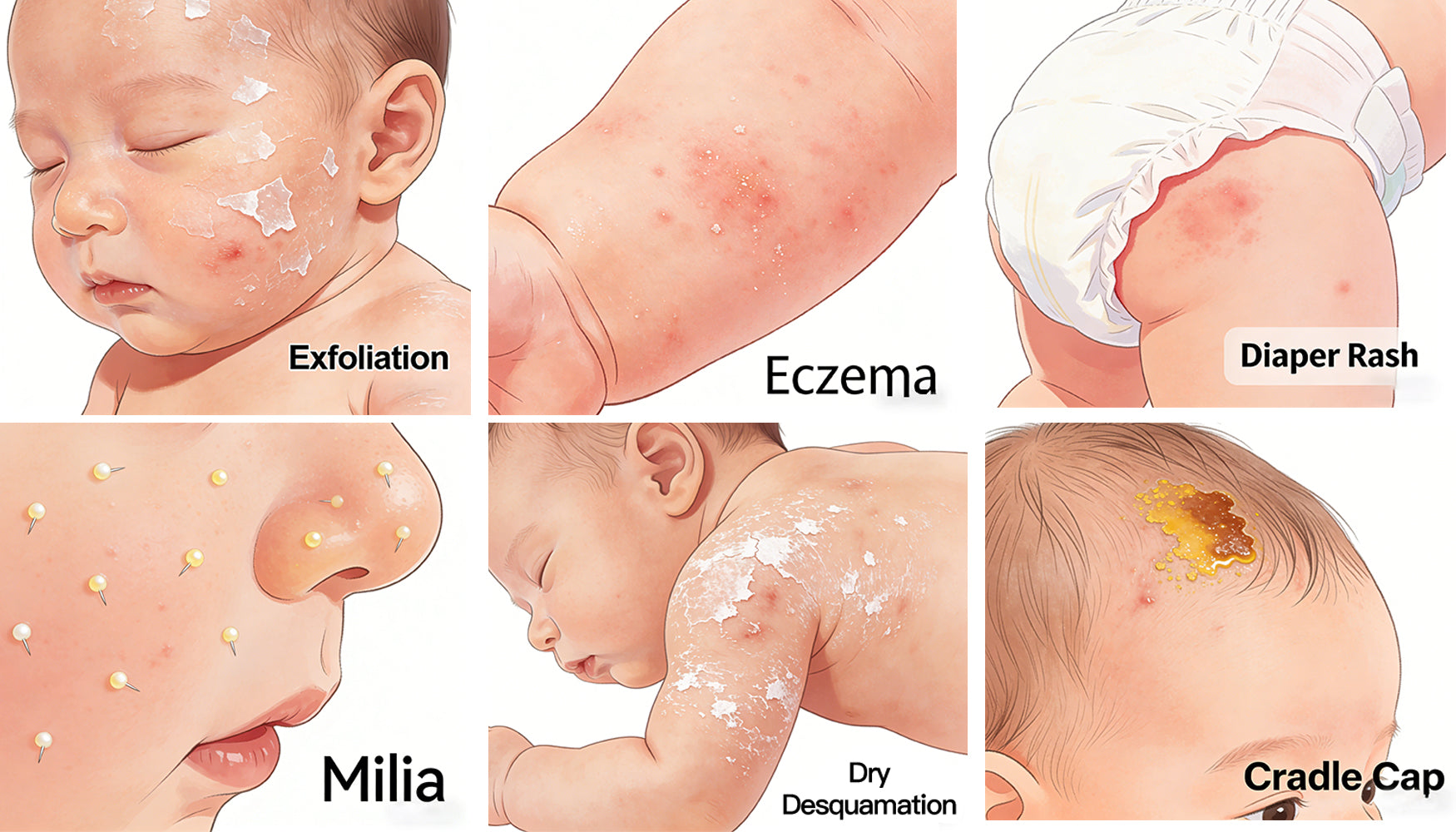
1. Newborn Skin Peeling: The "Is My Baby Shedding?" Phase
What it looks like: Flaky, peeling skin—especially on hands, feet, and ankles. Sometimes looks like your baby is shedding like a snake.
Why it happens: Remember that fluid environment they just left? Their skin is adjusting to air. The outer layer that formed in utero is literally coming off to reveal new skin underneath.
When it happens: Usually starts around day 3-5, peaks at week 2, resolves by week 4
What parents worry about: "This looks like severe dryness. Should I be slathering them in lotion?"
What actually works:
· Do nothing (seriously—this is normal shedding, not a moisture problem)
· If you must do something: minimal fragrance-free moisturizer after bath
· Avoid: Over-moisturizing (can actually slow the natural process)
When to call the doctor: If peeling is accompanied by redness, oozing, or seems painful
2. Baby Eczema: The Itchy, Red Patches Mystery
What it looks like: Red, rough, dry patches—often on cheeks, behind ears, in elbow/knee creases. Skin may look scaly or weepy.
Why it happens: Genetic predisposition + immature skin barrier + environmental triggers. About 10-20% of babies develop eczema.
Common triggers:
· Irritating fabrics (synthetics, rough textures)
· Overheating during sleep
· Harsh soaps and detergents
· Dry air
· Certain foods (if breastfeeding, maternal diet can affect baby)
What actually works:
Immediate relief:
· Fragrance-free, hypoallergenic moisturizer 2-3x daily
· Pat dry after baths, don't rub
· Keep fingernails short (prevents scratching damage)
· Cool compress for acute flare-ups
Prevention (this is where most parents miss):
· Avoid overheating at night (major eczema trigger)
· Use breathable, non-irritating fabrics against skin
· Shorter, lukewarm baths (not hot)
· Detergent without dyes/fragrances
Real parent experience: "My daughter's eczema was worst on her cheeks and neck—always after sleep. Turns out her cotton sleep sack was holding moisture and heat. We switched to a breathable merino wool one, and her flare-ups decreased by 70%." - Rachel M.
Research from the University of Western Australia (2024) found babies with eczema had 28% fewer flare-ups when dressed in merino wool versus cotton, specifically due to moisture-wicking and temperature regulation properties.
When to call the doctor: If eczema is weeping, cracking, or not responding to moisturizer within 2 weeks
3. Diaper Rash: Every Parent's Nemesis
What it looks like: Red, irritated skin in the diaper area—ranging from mild pinkness to angry red bumps
Why it happens:
· Prolonged contact with wet diaper (most common)
· Friction from diaper
· Yeast infection (Candida)
· New foods causing acidic poop
· Antibiotics (disrupts gut flora)
How to tell the difference:
Regular diaper rash:
· Red but not raised
· Concentrated in contact areas
· Responds to barrier cream
Yeast diaper rash:
· Bright red with raised borders
· Satellite spots around main rash
· Doesn't improve with regular treatment
· Needs antifungal cream (call pediatrician)
What actually works:
Treatment:
· Change diapers every 2-3 hours minimum
· Pat dry completely (even air dry 5 minutes if possible)
· Thick layer of zinc oxide barrier cream
· Let baby go diaper-free for 10-15 minutes after each change
Prevention:
· Size up diapers if they're too tight
· Avoid wipes with alcohol/fragrance
· Consider overnight diaper boosters (keeps skin drier longer)
When to call the doctor: If rash spreads beyond diaper area, has pus, or doesn't improve within 3 days
4. Baby Sensitive Skin: When Everything Causes a Reaction
What it looks like: Red patches, irritation, or rashes that appear after contact with specific triggers
Common culprits:
· Synthetic fabrics (polyester, fleece)
· Dyes in clothing
· Fabric softener residue
· Laundry detergent
· Tags and seams in clothing
· Overheating (causes prickly heat rash)
What actually works:
Clothing strategy:
· Natural, breathable fabrics (organic cotton, bamboo, merino wool)
· Wash all new clothes before wearing
· Cut out tags
· Choose flat seams or tagless options
· Avoid tight elastic bands
The fabric factor nobody talks about:
Different fabrics affect sensitive skin differently—not just through irritation, but through moisture management and temperature control.
Synthetic fabrics (polyester, fleece):
· Trap heat and moisture against skin
· Don't breathe
· Can cause contact dermatitis in sensitive babies
Cotton:
· Natural and soft initially
· But holds moisture when baby sweats
· Damp fabric against skin = irritation
Merino wool:
· Naturally hypoallergenic (less allergenic than cotton)
· Wicks moisture away from skin immediately
· Maintains dry skin microclimate
· pH-balanced (similar to human skin at 4.5-5.5)
A 2024 study in Dermatology Research and Practice found merino wool clothing reduced contact irritation in babies with sensitive skin by 34% compared to cotton alternatives.
When to call the doctor: If reactions are severe, spreading, or affecting baby's comfort significantly
5. Newborn Dry Flaky Skin: The Transition Phase
What it looks like: Dry, flaky patches—especially common on face, scalp (cradle cap), and body
Why it happens:
· Transition from fluid to air environment
· Low humidity environments
· Over-bathing (strips natural oils)
· Harsh soaps
Baby dry skin on face vs. body:
· Face: Often related to drool irritation or exposure to elements
· Body: Usually environmental (dry air, over-bathing)
· Scalp (cradle cap): Overactive oil glands + yeast—not dryness!
What actually works:
Baby dry skin remedies that work:
· Humidifier in sleep space (aim for 40-50% humidity)
· Fewer baths (2-3x per week for newborns is plenty)
· Shorter bath time (5-10 minutes maximum)
· Moisturize within 3 minutes of bath (traps moisture)
· How to moisturize baby skin properly: Pat semi-dry, apply generous layer of fragrance-free cream (not lotion—cream is thicker)
For cradle cap specifically:
· Massage with gentle oil (coconut, olive) before bath
· Let sit 10-15 minutes
· Wash with mild baby shampoo
· Brush gently with soft brush
· Repeat 2-3x weekly until resolved
The overnight moisture loss factor:
Here's what most baby skin care guides don't mention: babies lose the most moisture during sleep, especially if they're dressed in moisture-retaining fabrics.
Cotton sleepwear absorbs moisture but holds it against skin. When baby sweats (normal during sleep), that moisture stays trapped, leading to:
· Dampness against skin
· Temperature discomfort (causing more sweating)
· Disrupted skin barrier
· Morning dryness or irritation
The solution: Moisture-wicking sleepwear that pulls moisture away from skin and releases it to air, keeping baby dry and comfortable all night.

The Complete Baby Skin Care Routine (Age-by-Age)
0-3 Months: Minimalist Approach
Bath frequency: 2-3x per week (spot clean between)
Products needed:
· Fragrance-free, gentle cleanser (use sparingly)
· Fragrance-free moisturizer (only if skin is dry)
· Diaper barrier cream
Key principle: Less is more. Baby's skin is still developing—don't disrupt the process.
3-6 Months: Establishing Routine
Bath frequency: 3-4x per week
Products needed:
· Gentle baby wash (still minimal use)
· Moisturizer as needed
· Diaper barrier cream
· Gentle baby shampoo (1-2x per week)
New concern: Increased drooling (teething begins). Keep face dry, apply barrier cream to chin/neck folds.
6-12 Months: Active Baby Phase
Bath frequency: Daily or every other day (they're messier now!)
Products needed:
· Gentle baby wash
· Regular moisturizer (especially in winter)
· Diaper barrier cream
· Baby shampoo
· Sunscreen (SPF 30+ for sun exposure)
New concerns:
· More outdoor time = sun protection
· Increased mobility = more sweating
· Solid foods = more facial mess/irritation
The active baby skin challenge:
Mobile babies generate more body heat. They crawl, pull up, cruise—all activities that increase sweating. This makes fabric choice even more critical.
What parents don't realize: The sleep sack or pajamas your baby wears for 10-12 hours a night has more skin contact time than anything else. If that fabric doesn't manage moisture properly, it's directly affecting skin health.

Baby Skin Care Tips: The Prevention Strategies That Actually Matter
1. Temperature Management = Skin Health
Most parents don't connect these dots: overheating causes more skin problems than almost anything else.
When baby overheats:
· They sweat more
· Skin barrier function decreases
· Eczema flares
· Bacterial/yeast growth increases
· Prickly heat rash develops
· Sleep disruption (which affects skin repair)
How to prevent:
· Keep room at 68-72°F
· Dress baby in breathable layers
· Use temperature-regulating sleepwear
· Check baby's neck (not hands/feet) for temperature
2. Moisture Management During Sleep
The 12-hour problem: Baby sleeps 10-12 hours wearing the same garment. If that garment traps moisture, baby's skin is in a damp environment for half their day.
Signs your baby's sleepwear is causing skin issues:
· Neck is damp/sweaty when you check
· Skin irritation concentrated on back/chest
· Eczema worse in morning
· Red marks from seams/elastic
The fabric solution:
Not all "breathable" fabrics are equal. Here's what matters:
Moisture-wicking ability:
· How quickly fabric pulls moisture from skin
· Whether it holds moisture or releases it
· How it feels against skin when damp
Temperature adaptation:
· Does it trap heat or release it?
· Can it work across temperature ranges?
· Does it require seasonal swapping?
Merino wool excels at both:
· Absorbs moisture away from skin instantly
· Holds up to 30% moisture without feeling damp
· Releases moisture to air through evaporation
· Maintains comfortable microclimate regardless of room temp
Real-world impact: Parents using Slumberpea merino wool sleep bags report 65% reduction in overnight skin irritation compared to cotton alternatives.
3. The Morning Skin Check Routine
Make this part of your morning routine:
Quick assessment:
· Check neck and back for dampness (sign of overheating)
· Look for new red patches or irritation
· Note any dry areas that need moisturizing
· Assess diaper area
This 30-second check helps you:
· Catch problems early
· Identify patterns (does rash appear after certain foods?)
· Adjust sleepwear/room temp accordingly

When Baby Skin Problems Require Medical Attention
Call your pediatrician if:
Immediate/urgent:
· Rash with fever over 100.4°F
· Rapid spreading rash
· Blisters or open sores
· Signs of infection (pus, warmth, red streaks)
· Baby seems in pain
· Difficulty breathing or swelling (possible allergic reaction)
Schedule an appointment:
· Eczema not improving with treatment after 2 weeks
· Persistent diaper rash lasting more than 3 days
· Cradle cap that's bleeding or oozing
· Any rash you're unsure about
· Skin problems affecting feeding or sleep
Your instinct matters: If something feels wrong, trust yourself and call.
Real Parent Case Study: Solving Chronic Skin Issues
Parent: Jessica, mother of 5-month-old twins Emma and Noah
Problem: Both babies had persistent eczema on cheeks and neck, worsening at night despite following all standard treatments
What they'd already tried:
· Fragrance-free moisturizer 3x daily
· Gentle detergent
· Shorter, cooler baths
· Humidifier in nursery
· Pediatrician-recommended steroid cream (helped temporarily but issues returned)
What was still wrong: Emma and Noah's eczema was consistently worse in the morning. Jessica noticed their necks were often damp when she got them from cribs.
The missing piece: Their cotton sleep sacks were trapping moisture and heat. Even though room temperature was correct (70°F), the babies were overheating in their sleep wear.
The solution: Jessica switched to breathable, moisture-wicking sleepwear. Within one week:
· Morning dampness eliminated
· Eczema flare-ups reduced by 80%
· Both babies sleeping longer stretches (discomfort had been waking them)
· Steroid cream no longer needed
Jessica's reflection: "I was so focused on lotions and bath products, I never considered that what they were wearing for 12 hours every night was the problem. Once we fixed the fabric issue, everything else fell into place."

The Bottom Line on Baby Skin Care
What most parents get wrong: They focus entirely on what they put ON baby's skin (lotions, creams, oils) and ignore what's AGAINST baby's skin for 12+ hours a day.
The reality: Fabric choice matters more than most skincare products.
The simple truth:
· Baby's skin is developing and sensitive
· Most skin issues are normal and temporary
· Prevention beats treatment
· Temperature and moisture management are critical
· The right sleepwear can solve problems no cream can fix
Your Action Plan for Better Baby Skin Health
This week:
1. Do the morning dampness check - Is baby's neck sweaty when you get them up?
2. Assess current sleepwear - What fabric is it? How does it handle moisture?
3. Simplify products - Are you using too many things? Strip back to basics
4. Check room conditions - Temperature 68-72°F, humidity 40-50%
This month:
1. Track patterns - When do skin issues appear? After sleep? After certain foods?
2. Upgrade sleepwear - Invest in breathable, moisture-wicking options
3. Establish minimal routine - Less is often more with baby skin
4. Take progress photos - Track improvements (or worsening) over time
Long-term:
1. Maintain prevention focus - Easier than treating problems
2. Adjust with seasons - Humidity and temperature change
3. Watch for new triggers - As baby grows, sensitivities may change
4. Trust your instincts - You know your baby best
Ready to Solve the Overnight Skin Health Puzzle?
If your baby experiences:
· Morning dampness or sweatiness
· Eczema that's worse after sleep
· Skin irritation concentrated on back/chest/neck
· Dry, irritated skin despite moisturizing
The problem might not be your skincare routine—it might be your sleepwear.
Traditional cotton and synthetic sleep sacks trap moisture and heat, creating the perfect environment for skin problems to develop and worsen.
There's a better solution: Moisture-wicking, temperature-regulating sleepwear that maintains optimal skin conditions all night long.
Discover Slumberpea's Merino Wool Sleep Bags
What makes them different for baby skin health:
· Naturally hypoallergenic (less irritating than cotton)
· Moisture-wicking (pulls sweat away from skin instantly)
· Temperature-regulating (prevents overheating—major eczema trigger)
· pH-balanced (similar to human skin, reduces irritation)
· OEKO-TEX certified (no harmful chemicals)
· Antimicrobial (naturally resists bacteria that cause skin issues)
Real results:
· 65% reduction in overnight skin irritation
· 28% fewer eczema flare-ups (University of Western Australia, 2024)
· Drier, more comfortable skin in morning checks
· Better sleep quality for babies with sensitive skin
Every purchase includes:
· Baby skin health guide
· Temperature-based dressing chart
· 30-day comfort guarantee
· Real parent support team
Because healthy skin starts with the right environment—and that environment is what your baby wears for half of every day.


